Ensuring a Safe Operations Your children are safe in our program. Learn More

Birds

Blue Jay
Blue Jays are found in all kinds of forests but especially near oak trees; they’re more abundant near forest edges than in deep forest. They’re common in urban and suburban areas, especially where oaks or bird feeders are found.

White-eyed vireo
White-eyed Vireos frequent scrubby areas year-round including overgrown pastures, forested edges, streamside thickets, second-growth forests, and bramble-filled fields. In Florida, they also use mangroves.

Northern cardinal
Look for Northern Cardinals in dense shrubby areas such as forest edges, overgrown fields, hedgerows, backyards, marshy thickets, mesquite, regrowing forest, and ornamental landscaping. Cardinals nest in dense foliage and look for conspicuous, fairly high perches for singing. Growth of towns and suburbs across eastern North America has helped the cardinal expand its range northward.

red-eyed viero
Throughout their summer range, Red-eyed Vireos breed in deciduous and mixed forests with shrubby understories. Numbers are greatest away from forest edges and near small openings in the interior forest canopy. In the pine forests of the southeastern United States, they prefer stream and river edges supporting hardwood trees. Red-eyed Vireos can sometimes be found in residential areas, city parks, and cemeteries with enough large trees.

carolina chickadee
Carolina Chickadees may be found in deciduous and mixed deciduous-coniferous woodlands, swamps, riparian areas, open woods and parks, and also in suburban and urban areas.
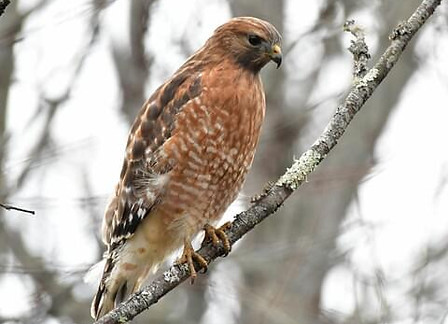
Red shouldered hawk
ed-shouldered Hawks are forest raptors. They tend to live in stands with an open subcanopy, which makes it easier for them to hunt. They are not exclusively birds of deep forest, though; you’ll find Red-shouldered Hawks in some suburban areas where houses or other buildings are mixed into woodlands. In the West, they live in riparian and oak woodlands, and also in eucalyptus groves and some residential areas.

american crow
American Crows are highly adaptable and will live in any open place that offers a few trees to perch in and a reliable source of food. Regularly uses both natural and human created habitats, including farmland, pasture, landfills, city parks, golf courses, cemeteries, yards, vacant lots, highway turnarounds, feedlots, and the shores of rivers, streams, marshes, and beaches. Crows tend to avoid unbroken expanses of forest, but do show up at forest campgrounds and travel into forests along roads and rivers. Avoids deserts.

new
Discovering new species...
new
Discovering new species
Did I miss anything?
Come visit, let me know if you found any new species!
I've had a great time discovering as many bird species I could identify with help from the Merlin Bird ID app. Be sure and visit the site if you see any birds you would like to learn more about.